A Holy Saturday Devotional — Anticipating Resurrection
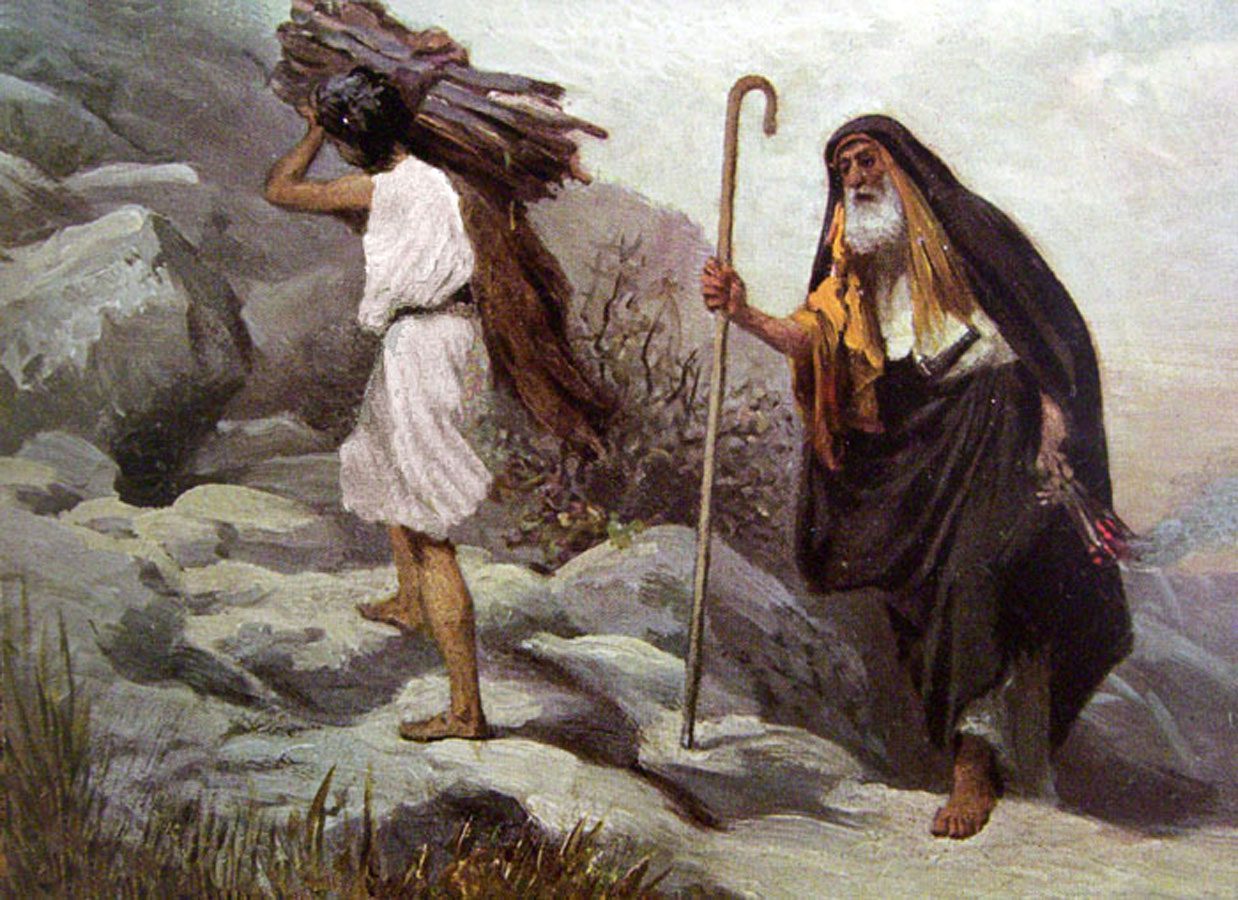
“He considered that God was able even to raise him from the dead, from which, figuratively speaking, he did receive him back.” (Hebrews 11:19)
The Old Testament does not know the name of Jesus. Yet, repeatedly, it reaches toward him. It does so in shadows and types and promises. These strain forward into a future only God could see. Holy Saturday is a good day to sit with those shadows. The disciples on that first Saturday had only the shadows. They had not yet seen the dawn. But the shadows were there, and they were enough — for those with eyes to see.
On a mountain in Moriah, Abraham lifted the knife (Genesis 22:10).
He had waited twenty-five years for Isaac. He had laughed at the promise and clung to it. And now God was asking for the boy back. What Abraham did next is almost incomprehensible: he obeyed. He rose early. He walked three days to the place of sacrifice. He bound his son and laid him on the wood.
But something was already at work in Abraham’s heart. The writer of Hebrews tells us he went up that mountain with faith. Even if he plunged the knife, he believed God would raise Isaac from the dead. He had no precedent for that belief. No one had ever been raised. He simply knew the God who had given life from Sarah’s dead womb. He trusted that same God could give life again.
God stopped his hand. A ram appeared in the thicket. And Abraham named the place: The Lord will provide. The boy he received back was, as Hebrews says, a figure — a preview — of a greater Son. This greater Son would be bound and sacrificed. He would be received back from death through death itself. He would emerge out the other side, not by a staying of the hand.
Holy Saturday sits between the knife and the ram. But the ram is coming.
In a valley full of bones, the wind began to blow. (Ezekiel 37)
Ezekiel stood among the dead. Dry bones, bleached by the sun — the house of Israel in exile, hope utterly lost. And God asked him a question that sounds almost cruel: Can these bones live? The prophet answered carefully: O Lord God, you know. He would not pretend. He had seen too much death.
Then God told him to preach to the bones.
It is one of the strangest commands in all of Scripture. Preach to the dead. Speak life over what cannot hear. Ezekiel obeyed. The bones came together and flesh appeared on them. Then, the breath of God entered them. They stood on their feet as a vast army.
The lesson is not subtle: new creation is the exclusive work of the Spirit of God. No natural process produces it. No human effort assembles it. Only God can perform the miracle of life out of death. This is exactly what God intends to do. On Easter morning, the breath of God would enter the tomb, and the dead Man would stand.
Holy Saturday is the valley. The bones are still dry. But the wind is gathering.
In the night watches, David rested secure (Psalm 16)
Psalm 16 is a psalm of trust — quiet, confident, almost serene. David meditates on the goodness of God, the beauty of his inheritance, the counsel he receives even in the night. At the end, he makes a profound statement. This statement reaches far beyond his own experience. It says, “You will not abandon my soul to Sheol, or let your holy one see corruption.”
David died. His soul did go to Sheol. His body did see corruption. Peter stood up at Pentecost and said so plainly — and then turned the psalm on its axis. David was a prophet, Peter said. He knew God had sworn to raise up one of his descendants. He foresaw and spoke about the resurrection of Jesus Christ. The psalm was never only about David. It was always reaching toward the one in whom it would be perfectly, finally, and literally true.
Jesus lay in the tomb on Holy Saturday — and his body would not see corruption. The Father would not abandon his soul. The path of life was already laid out before him. He would walk out of the tomb on the third day.
This is the gift the Old Testament gives us on Holy Saturday. It is a long, patient, accumulated testimony. God is a God who provides in the place of sacrifice. He breathes life into the valley of death and will not abandon his holy one to the grave. The disciples sat in grief that first Saturday. They could not yet see what the Scriptures had been saying all along.
We can see it. The light of Easter is not here yet. That comes tomorrow. Now we are in the long shadows of the Old Testament. These shadows all fall eastward, toward the rising sun.
Wait. The dawn is coming.
“Therefore my heart is glad, and my whole being rejoices; my flesh also dwells secure. For you will not abandon my soul to Sheol, or let your holy one see corruption. You make known to me the path of life.” (Psalm 16:9–11)
Father of Abraham. You are the Breath of the valley. Keeper of your holy one — on this silent day we hold these ancient words as torches in the dark. You have never failed to provide. You have never left your people without breath and hope. You have never abandoned your Son. Steady our hearts in the waiting. Let these shadows remind us that the Light of the risen Christ is almost here. Amen.

