A Holy Saturday Devotional — Lamentations 3:1–33
“I am the man who has seen affliction under the rod of his wrath.”
– Lamentations 3:1
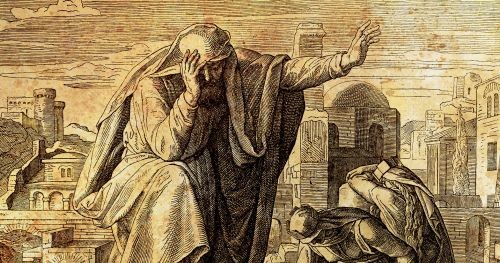
Jeremiah wrote these words in the wreckage of Jerusalem. The city had fallen. The temple was ash. God’s people sat in ruins. The poet chose not to look away from it. He wrote what he saw: Darkness, not light; walled-in ways; worn flesh; and broken bones. He did not reach too quickly for comfort. He sat in the devastation and named it.
Holy Saturday invites us to do the same.
This is the day the disciples did not know what we know. For them, there was no “but Sunday’s coming.”
There was only the tomb, the silence, and the unbearable weight of shattered hope. The one they had left everything to follow was dead. And God, it seemed, had nothing to say. We do well to feel the full gravity of that silence.
And yet — Jeremiah does something extraordinary in the middle of his grief. Without leaving the darkness, without pretending the ruins are not ruins, he pauses. “But this I call to mind, and therefore I have hope” (v. 21). What does he call to mind? Not his own strength. Not a change in circumstances. Only the character of God: steadfast love that does not cease. God provides mercies that are new every morning. His faithfulness is great.
He is not performing optimism. He is doing something harder — he is remembering in the dark.
Holy Saturday is a day for that kind of remembering. The tomb is sealed. The stone is in place. Every human hope is buried with Jesus. And into that silence we bring nothing of our own — no strength, no answer, no way forward. We simply remember: “The Lord is my portion, says my soul, therefore I will hope in him” (v. 24).
This is the posture of Holy Saturday: Not yet resurrection joy, but not despair either. It is the quiet, costly act of waiting on a God who has not yet spoken. We trust that his steadfast love has not ceased, even when we can’t yet see it.
The man who has seen affliction in Lamentations 3 is Jeremiah. By the time we reach the New Testament, we know there is another Man who has seen affliction. He was crushed under the full weight of divine wrath, not for his own sin but for ours. Jesus entered the darkness deeper than Jeremiah ever could. He was not merely near the ruins; he became the sacrifice that the ruins pointed to.
And he lay in the tomb.
So we wait today. We do not wait as those without hope. We wait as those who have not yet seen what we believe. We sit with the disciples in their not-knowing. We let the silence be silent. We resist the urge to rush past the grief to the celebration.
And in that waiting, we do what Jeremiah did. We remember the steadfast love of the Lord. We hope.
“The Lord is good to those who wait for him, to the soul who seeks him. It is good that one should wait quietly for the salvation of the Lord.”
– Lamentations 3:25–26
Prayer:
Lord, on this silent day, teach us to wait. We do not despise the darkness — you have entered it. We do not rush past the tomb — your Son lay in it. Give us the faith to remember your steadfast love when we can’t yet see your hand. Make us a people who hope, not because our circumstances have changed, but because you do not change. Amen.

